
思想
Philosophy
Attracting talent from across the world. In the twenty-first century, the urban population overtook the rural, and city-dwellers became the majority of humankind. As cities have grown into megacities, competition between them has come to shape the strength of nations.
01
City and People
都市と人
Reports on urban competitiveness state that unless cities attract and energise visionaries, creative leaders, researchers, artists, tourists and enterprises from around the world, they will decline.
An essential trait of human beings is learning from one another. As a species, we learn chiefly from the auditory, visual and olfactory cues given off by our fellow humans. Because people learn so much from others, it matters to compete while sensing "they can do it, I mustn't fall behind" — but it matters even more to sense how others interpret and digest things, and to learn from one another in turn.
A city's success rests on its human capital, and is said to flourish through having many small enterprises and highly skilled citizens — urban people. Good futures, new wisdom, new thinking and new value, it is said, are born of encounters and exchange with people from other fields. To become a successful city requires gathering intelligent urban people, and refining the places where they work together and interact.
The evolution of living things produced the function of the brain; the evolution of the brain evolved humankind; and visionaries who used their brain function to the full advanced civilisation. Three million years ago, did the brain develop because we left the forest, or did we leave the forest because the brain developed? Either way, humanity set out on the path toward becoming urban. The developed brain brought humankind the qualities of "inventive talent, artistic creativity, and mastery of complex tools".
Neanderthals, though possessed of greater brain volume than Homo sapiens, lacked "the ability to generate the new — that is, innovation" — and are said to have vanished as a result. Homo sapiens, through the unique quality of innovation, accumulated wealth, refined culture, built cities, and created art. In time, by analysing the brain, we produced artificial intelligence, and humankind has advanced even into space, with talk of living on Mars by 2040.
In this present age, where human consciousness struggles to keep pace with the advance of technology and urbanisation, what will become of the city, and what should we, as urban people, do? To see the future, one must first look back to the past.
02
Shichu no Sankyo
市中の山居
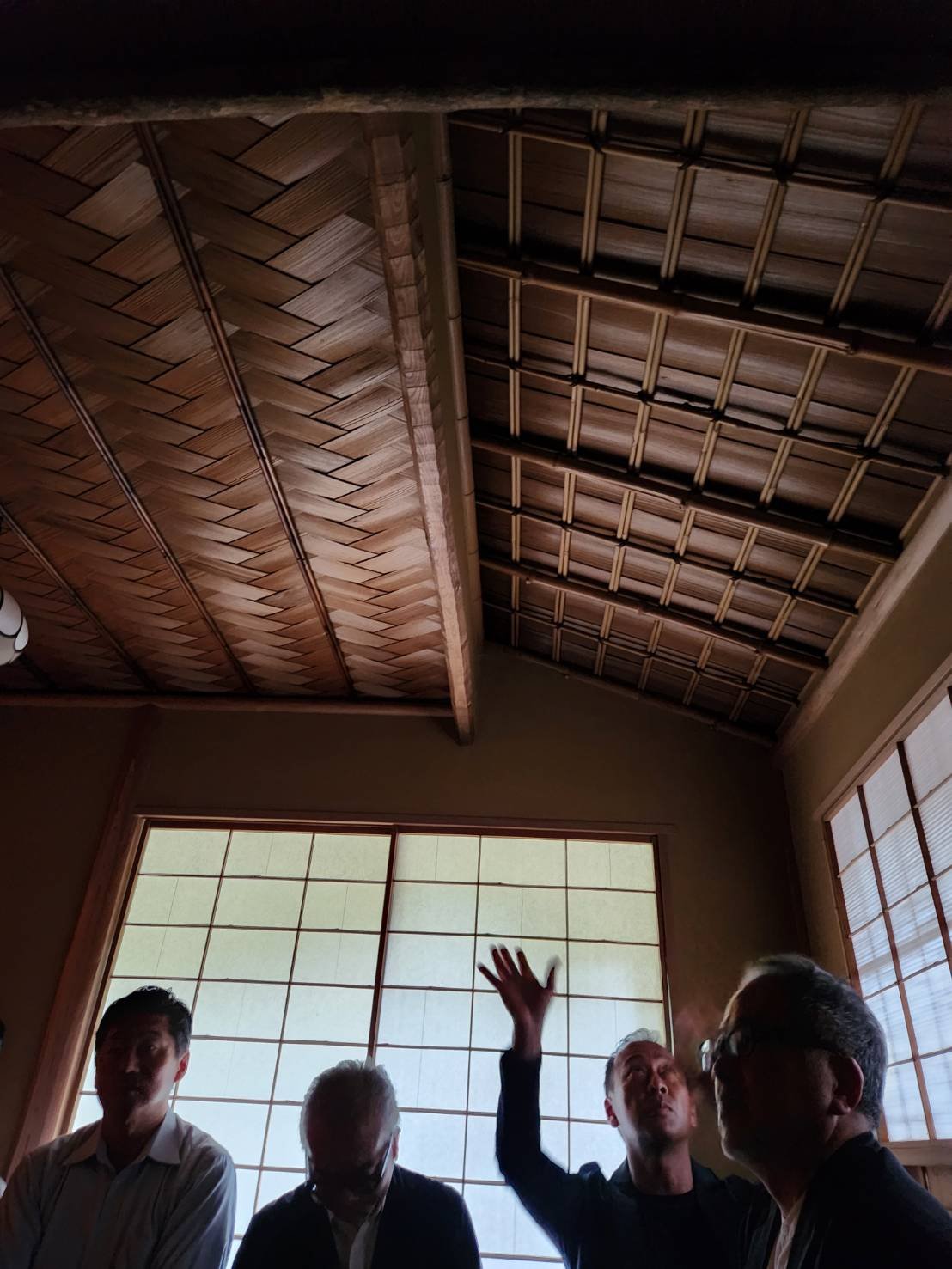
In the sixteenth century, Sakai was the most successful city in Japan, known even abroad. Its people fought ceaselessly to succeed amid rapid change at home and abroad, living lives of relentless toil, burdened by the stress such toil placed on body and mind. To resolve this, Sakai's creative minds produced a quiet place for those who fight — "shichu no sankyo", a mountain dwelling in the city.
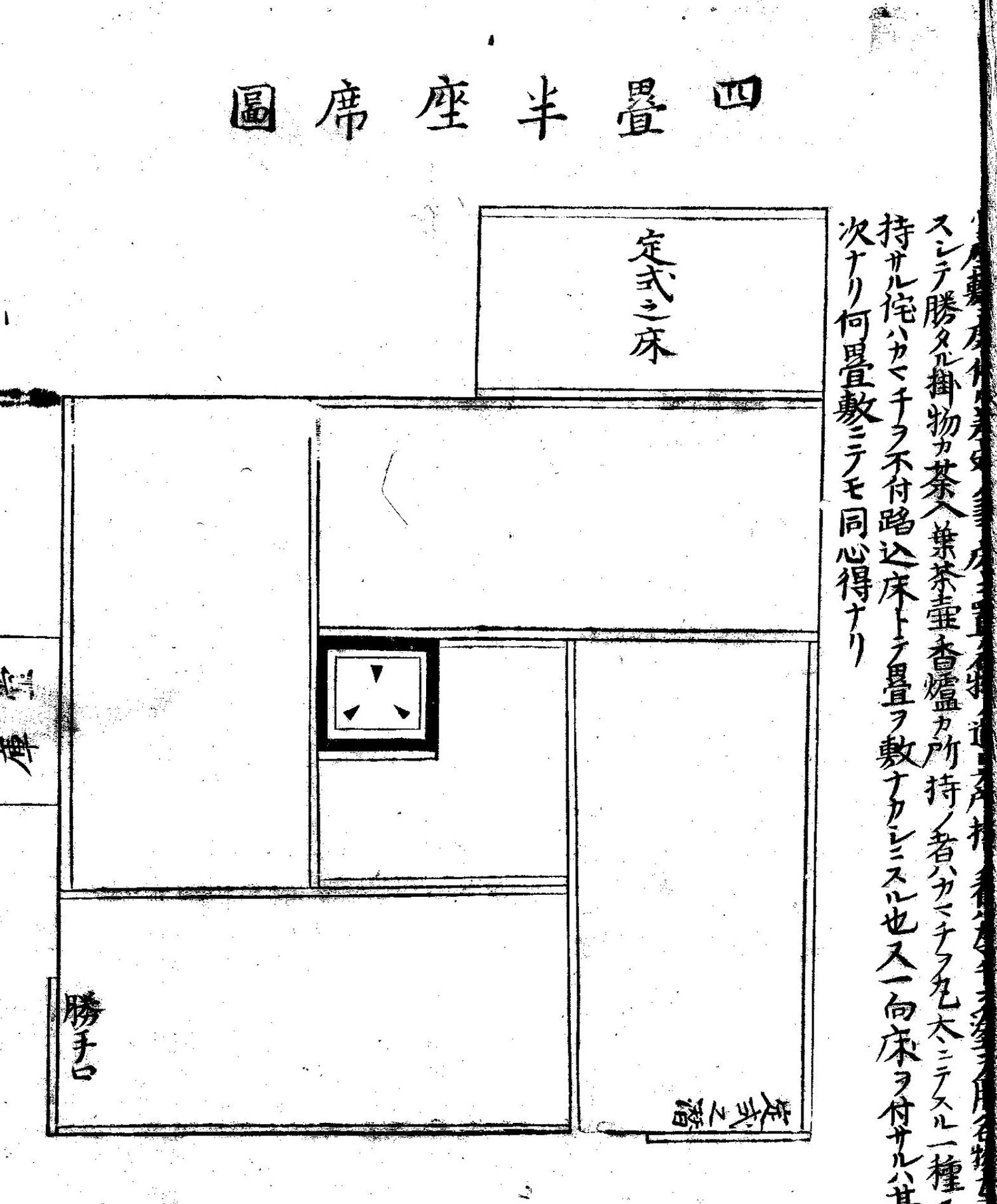
Shichu no sankyo was born as an architecture in which to cultivate the spirit through matcha, a refined taste; through the art appropriate to savouring the spirituality matcha evokes; and through appreciating that art. It was a hut of no more than four and a half tatami mats, austere in appearance yet lavish in refinement.
"Shichu no sankyo" — though it may appear a poor dwelling,
in truth it is itself a thing of luxury and expense.João Rodrigues — a Portuguese interpreter who visited Japan in the Warring States period
02.1
World's First Curation
床の間という発明
Where the model for the architecture of kings and lords elsewhere was sacred, built to draw near to heaven and the gods, Rodrigues was bewildered that the ruling class of Japan found greater value than in gold, silver or jewels in "shichu no sankyo" — a structure that looked like nothing more than a rustic country hut.
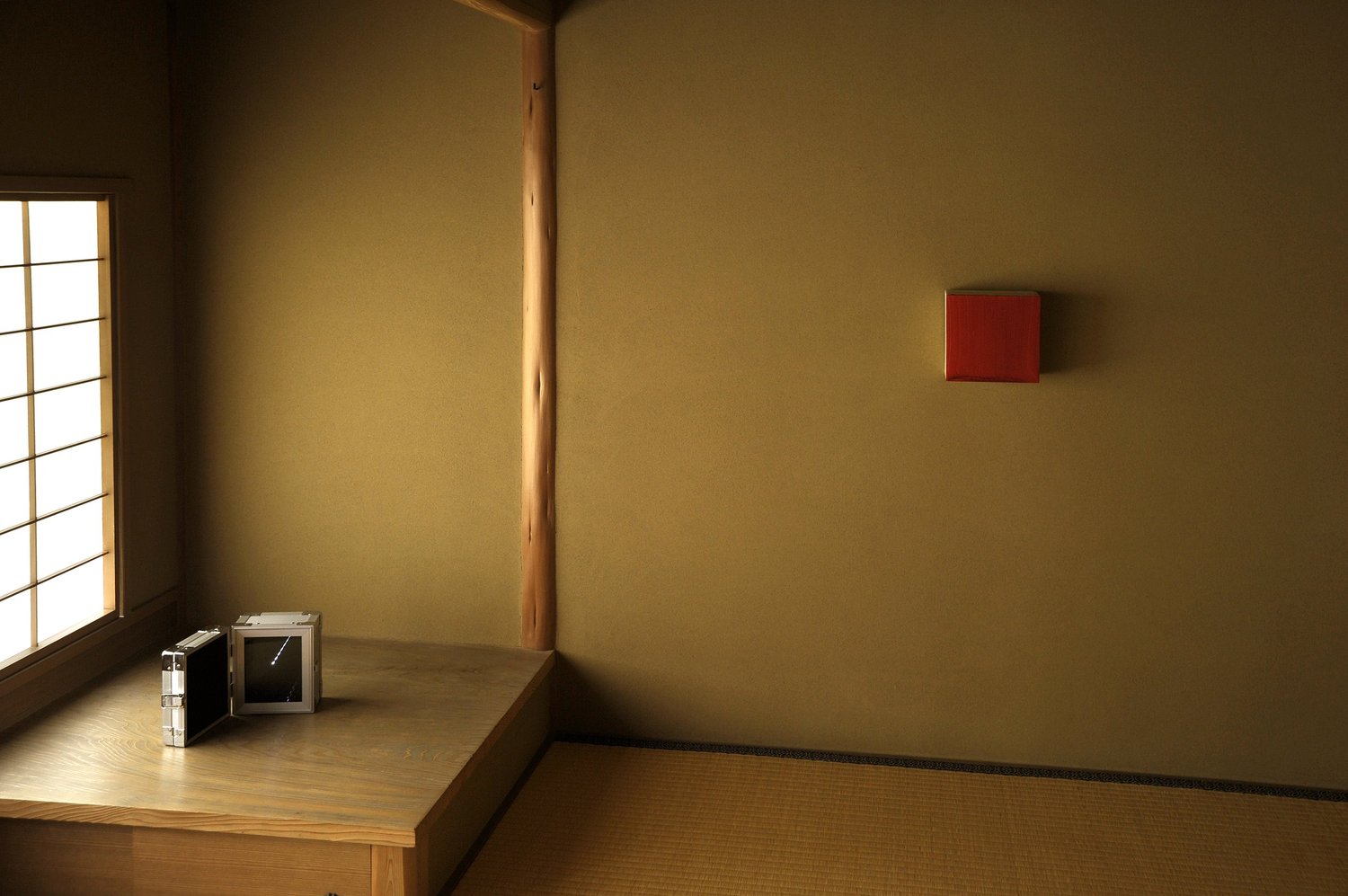
The building itself was art, its whole lifestyle designed around the tokonoma — the world's first space for art curation.
In the West, the salon arose under the Bourbon dynasty of seventeenth-century France, and the café in late-nineteenth-century Vienna. Two hundred years before either, Japan had already produced a social space, and a lifestyle, built around art as a medium for refining one's vision.
03
Blending Boundaries
和漢のさかいをまぎらかす
Before shichu no sankyo came into fashion, Murata Juko of Nara taught that "blending the boundaries of wa and kan" was of great importance.
Taking the Japanisation of Song, Yuan and Ming culture as his example, he proposed, as a skill for the urban people who would open a new age, the very Japanese talent for making foreign culture one's own — a sense for hybridising the different.
"Shichu no sankyo", hybridising the country house — an opposite thing — within the city, was born from this trait carried down through generations of Japanese people.
04
Yamada Sohen
ハレをツネに、ツネをハレに
Yamada Sohen, founder of the Yamada family and of the Sohen school of tea ceremony, studied under Sen Sotan, grandson of Sen no Rikyu. Born at the heart of Kyoto, absorbing the most advanced culture of his time, Sohen absorbed through his teacher Rikyu's urban spirit crystallised as wabi-suki and shichu no sankyo, and was granted the Rikyu brand name "Fushin-an".
Sohen rephrased "blending the boundaries of wa and kan" and "shichu no sankyo" as "making hare (the extraordinary) tsune (the ordinary), and tsune hare" — passing down to his descendants both the practice of living the extraordinary as the everyday, and the power to hybridise.
He also transformed "chanoyu", the social practice of leaders once conducted in shichu no sankyo, into "chado" — a disciplined way of learning manners and practice — becoming a central figure in shaping tea ceremony into Japan's traditional culture, and the founder of a school of tea.
In exchange for the flourishing of chado as a discipline, shichu no sankyo — once a place of exchange — became a tea room in which manners were practised within a closed community.
What might a modern shichu no sankyo look like — a place where urban people recover their vitality and exchange with one another? UCI founder Yamada Nagamitsu, the eleventh-generation head of the Sohen school of tea ceremony, arrived through trial and error at the cabin.

05
Urban Cabin 2.0
市中の山居2.0 ‐ Urban Cabin
Four hundred years since the age when shichu no sankyo flourished, New York gave rise to the cabin — a simple, soothing space in nature for recovery, born of people worn out by the loss of humanity under advancing capitalism and by the decline of dialogue under digitalisation.
Recognising that, East and West alike, simple spaces were being chosen to address the problems of urbanisation, Yamada thought of shichu as "urban" and sankyo as "cabin" — and it struck him: what about "Shichu no Sankyo 2.0 — Urban Cabin"? He believed it would connect with the Western context and become something global.
California — home to NASA's Ames Research Center and to Silicon Valley, birthplace of new technologies — produced a culture that underlies our present-day lives and connects, too, to the cabin. Yamada, raised in Kamakura amid Californian culture, created urban cabin as a hybrid of Japan and the West, of tradition and the present.
Chado, which has developed since the Meiji era largely as a discipline for women, plays a great role in Japan's traditional culture. Believing that urban cabin's activities might risk harming the tradition of the Sohen school, and that pursuing it within a separate framework would serve the development of both, Yamada — following the example of the Esalen Institute, sacred ground of the hippie counterculture — established Urban Cabin Institute under his own name, Yamada Nagamitsu.
06
About UCI
Urban Cabin Instituteについて
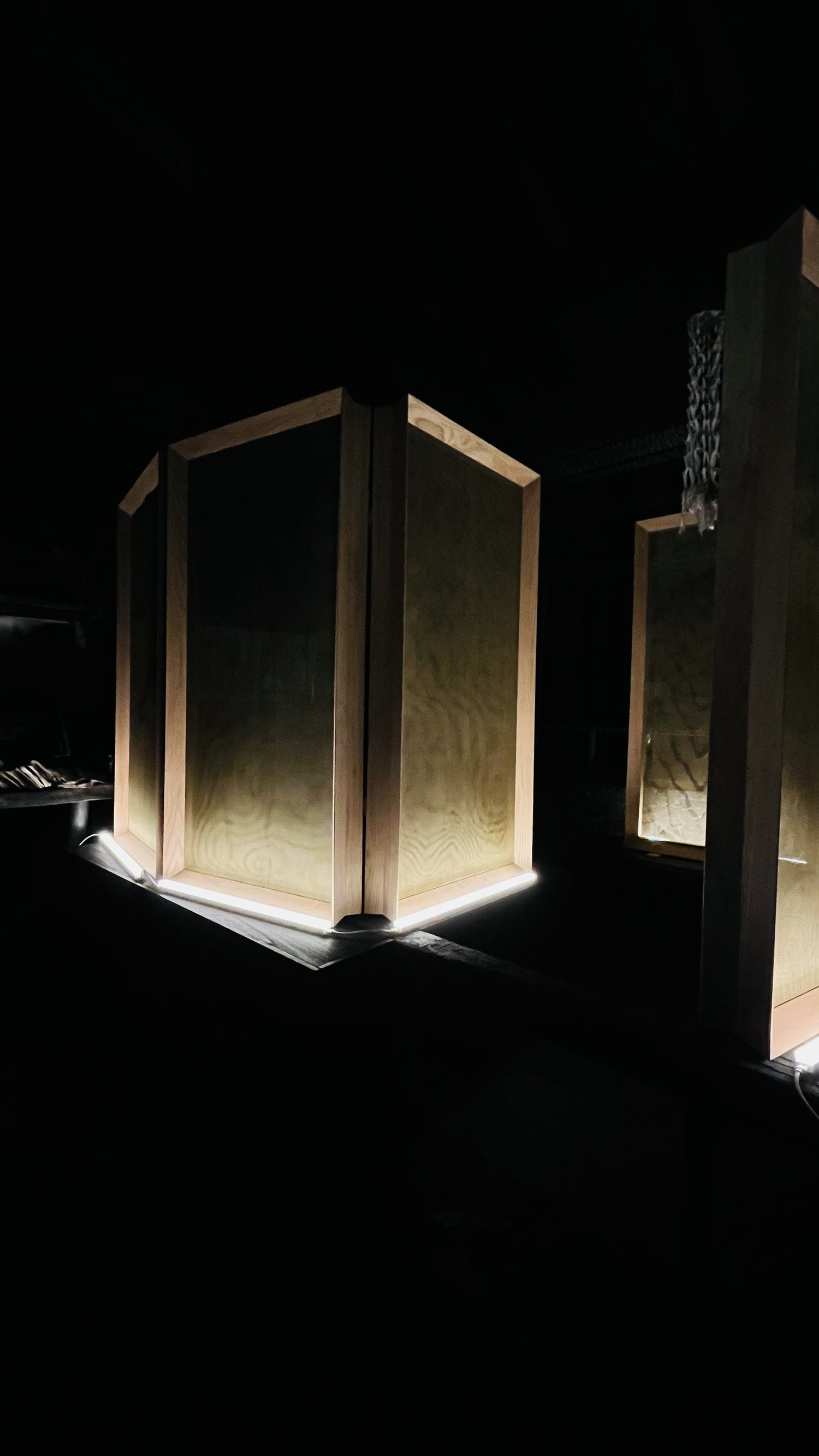
Urban Cabin Institute was founded within the Yamada Family General Incorporated Association as a new family business, by Yamada Nagamitsu — 11th generation head of the Yamada family's Fushin-an — and Yamada Rie, to carry forward the uniquely Japanese value of "shichu no sankyo".
Through art, space, culture, manners, travel, the brain, and technology — the urban way of using wealth — we refine and brand leaders and enterprises, sustaining the development of Japanese and indeed human culture, and playing our part in building a peaceful society.
The Work of Urban Cabin Institute
Centred on the Yamadas' domestic and international networks and on the provision of experiences of time and space, we carry out high-end branding that refines urban people through Japanese luxury, and connects to the revitalisation of cities.
- 1. Space Production ── Gardens / Old Farmhouses, Small Chambers
- 2. Impact Leadership Programs ── Wabi-Suki-Do / UC Evangelist
- 3. Branding, Family Business Support
- 4. Design of Luxury Travel
- 5. Art Sales
07
Family Business
都市を活性化するファミリービジネス
Family businesses have long represented their lands and elevated their appeal — from the Hata clan, who served Prince Shotoku and took part in building the Heian capital, to the Medici, who made Florence the city of the Renaissance, and the Tenno-ji-ya Tsuda family, who supported Nobunaga and Hideyoshi.
Yamada Rie has been chosen as the Japan committee chair for the 2025 world summit of FBN, the family business network organisation, to be held at Tokyo's Odaiba. She is producing a promotional video for the summit and planning a learning journey visiting family businesses across Japan.