
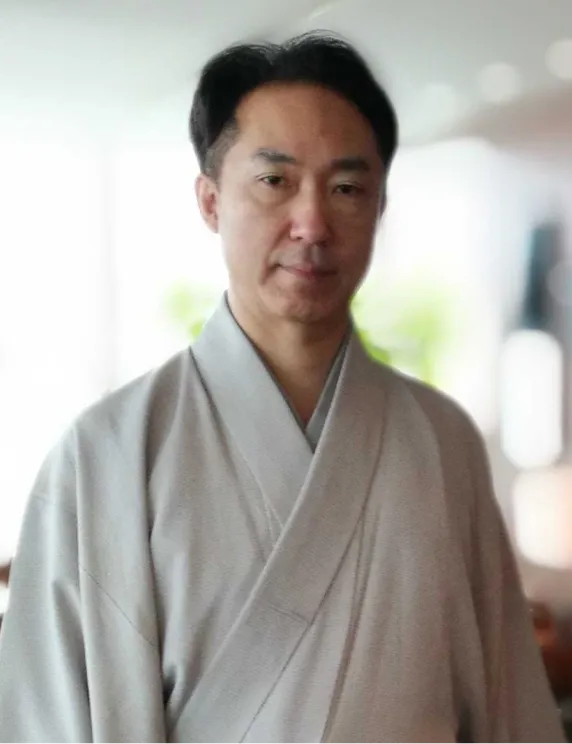
山田長光 — Founder
Yamada Nagamitsu
Born in Kamakura, raised amid California culture and the influence of a grandfather who served the Ottoman emperor. At twenty-one he succeeded as the 11th-generation iemoto of the Sohen school and took the name of the first-generation Sohen. In 2022 he created Wabi-Suki-Do and now leads Urban Cabin Institute.
00
Two Names
二つの名
The present head of the Sohen school is Yuyusai Yamada Sohen, 11th of his line. Since succeeding at the age of twenty-one, he has pursued a way of tea suited to the present age and built an original method for learning temae.
Alongside this, as Yamada Nagamitsu — 11th generation head of the Yamada family — he pursues collaborations between tea and art and the wider practice of tea among business people. Urban Cabin Institute is the undertaking that carries this latter work.
While the Sohen school systematises the practice of tea and transmits it widely, the Yamada-ke General Incorporated Association runs programmes for business leaders. The Urban Cabin Institute division is the body driving that work.
01
The Words Urban Cabin
urban cabin という言葉
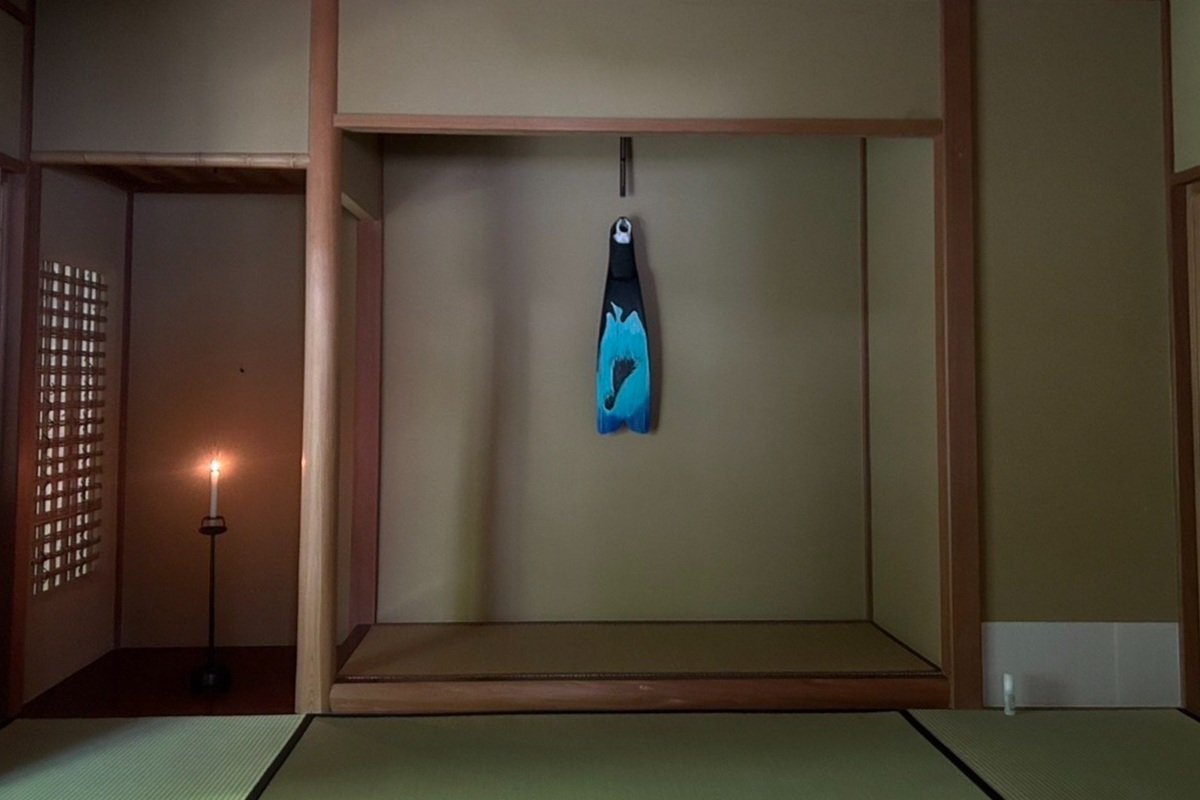
He arrived at the idea of the "urban cabin" in 2018, after learning that the cabin was quietly becoming a movement in architectural media and sensing its possibility.
Busy leaders are always in search of stillness. Imagining a mountain dwelling in the city where such a time and space could be experienced, the term "urban cabin" was born. The cabin also draws on the current of hippie culture — seeking harmony with nature and refusing to pander to the crowd. The coastline of Kamakura, the Yamada family's home, is not unlike California, and he felt a kinship with an American way of life.
"Busy leaders are always in search of stillness.
A mountain dwelling in the city, where that can be experienced."
02
Founding Wabi-Suki-Do
侘び数寄道の創設
The development of "Wabi-Suki-Do" traces back to 2021. Yamada was then a member of the executives' salon run by the business magazine Forbes JAPAN, and Hideki Sato, who managed the salon's programming at the time, consulted him about a course for its members. Sato later joined the Yamada family organisation and now drives the business as COO of the UCI division.
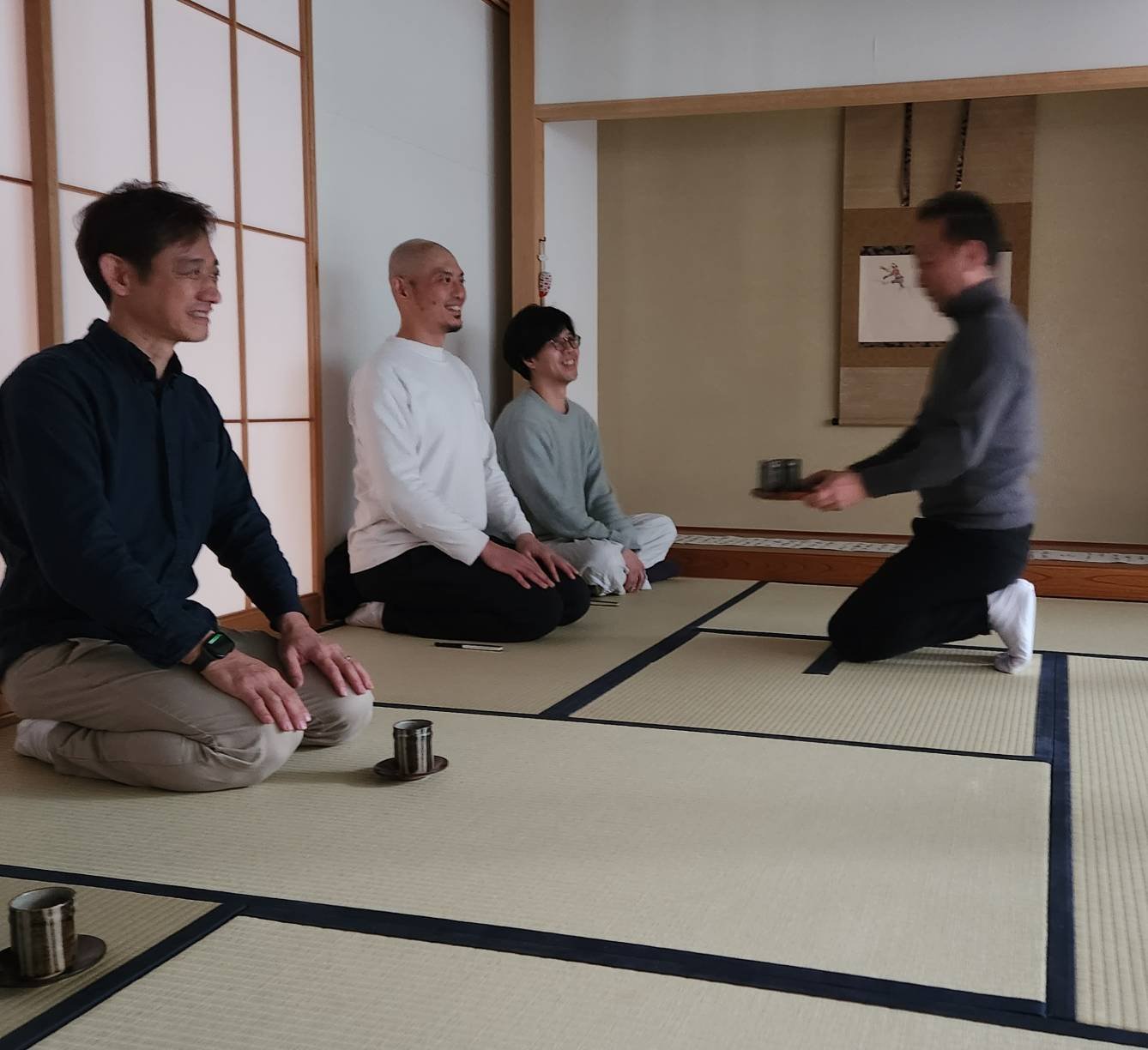
Wabi-Suki-Do is a course for business leaders aimed at making "wabi-suki" — a uniquely Japanese value and sensibility — one's own, held twenty-four times over two years. Unlike the study of tea, participants do not learn temae; instead they explore the philosophy of wabi-suki over two years, and at the close are conferred a "so" name corresponding to a tea name.
03
Engagement with Art
藝術との取り組み
Asking continually "what kind of art does a leader immersed in daily management need?", he arrived at "Business Leaders meets Artist" as an art practice leaders can undertake without strain.
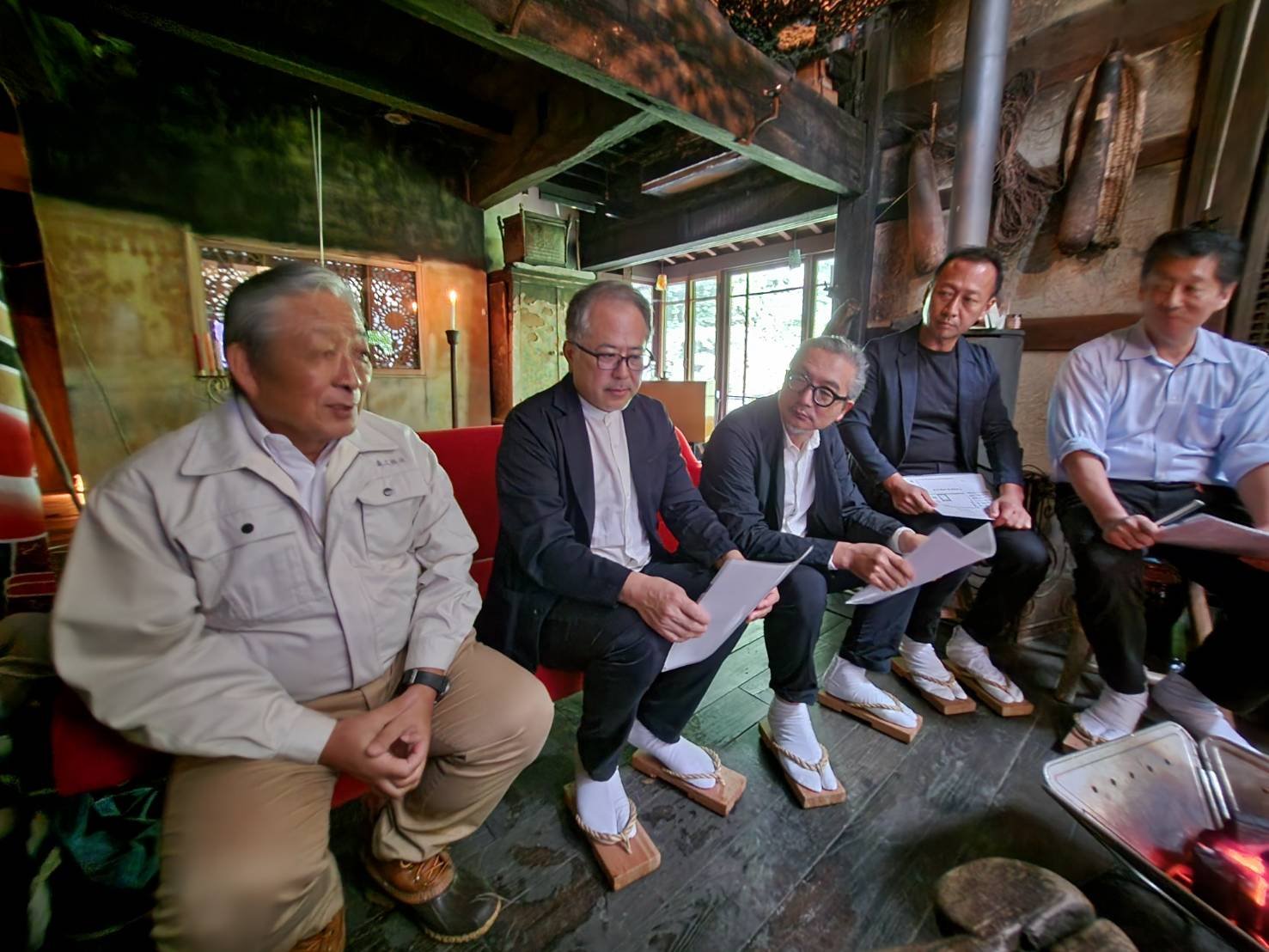
At the art dojo BLACK CUBE — the fire-damaged old farmhouse "Rikiiken" given new life — he holds exhibitions through which leaders refine the way they frame questions, their sensibility and their communication, drawing on the way of life and creativity of artists.
Profile
Profile
Named Nagamitsu, taking the character "naga" from Ogasawara Nagao, viscount of the Ogasawara family the Yamada family served.
Born in Kamakura in 1966, he grew up surrounded by California culture; under the influence of a grandfather who served the Ottoman emperor he turned his gaze outward to the world.
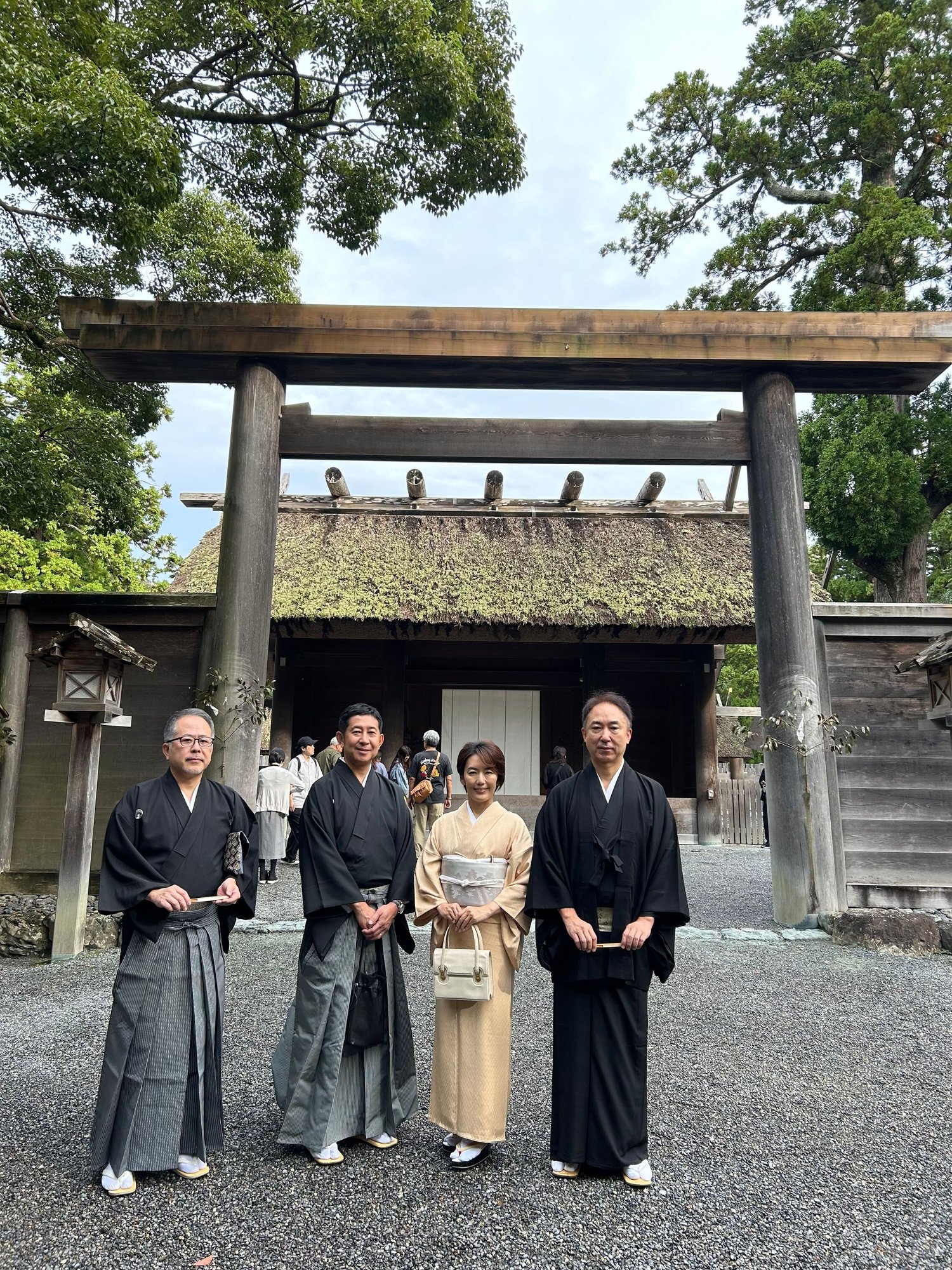
At twenty-one he became the 11th-generation iemoto of the Sohen school of tea, and at twenty-four he took the name of the first-generation Sohen, the founder of the Yamada house, holding gatherings for leading business people.
As a new brand for the Yamada family and as an art project, he founded URBAN CABIN INSTITUTE, inspired by ESALEN INSTITUTE, the hippie movement's sanctuary at Big Sur, California.
The first Sohen created the concept known as the way of tea; the eleventh, Nagamitsu, created Wabi-Suki-Do in 2022.
Chronology
Chronology
- Age 21
- Succeeded as 11th generation head of Fushin-an of the Sohen school, pursuing a way of tea suited to the present age and building an original method for learning temae.
- 2018
- Noticing the quiet momentum around the cabin in architectural media, he coined the term "urban cabin" out of the idea of shichu no sankyo — a mountain dwelling in the city.
- 2021
- An encounter at the executives' salon of Forbes JAPAN led him to begin developing a course for business leaders.
- Present
- Through the Urban Cabin Institute division of Yamada-ke General Incorporated Association, he pursues space production, leadership programmes, branding and art.